If you are thinking about building a small rental portfolio in Greater Bangor, the biggest mistake is assuming every property will perform the same way. This market is small, varied, and very local, which means a duplex in Bangor can pencil out differently than a house in Hampden or a rental near Orono. In this guide, you’ll learn what makes the area distinct, how to underwrite conservatively, and which local rules and property issues deserve extra attention before you buy. Let’s dive in.
Why Greater Bangor Feels Different
Greater Bangor is not one uniform rental market. Bangor had 32,446 residents in 2024 and an owner-occupied housing rate of 47.2% in 2020-2024, while Penobscot County had 157,967 residents in 2025 and a much higher owner-occupied rate of 70.3%. That tells you Bangor itself is more rental-heavy than the county overall.
Rents also change noticeably from one town to the next. Bangor’s median gross rent was $1,055, compared with $1,086 in Brewer, $1,255 in Orono, $1,286 in Hampden, and $1,406 in Hermon. If you are building a portfolio, that spread is a reminder to analyze each micro-area and property type on its own.
Demand appears to have real support, but supply is still catching up. Bangor’s 2025 housing study found a shortage of up to 700 rental homes affordable to households earning less than $35,000 annually, and roughly 1,200 affordable to households earning less than $25,000. The city also reported 82 completed dwelling units and 162 permitted units in FY2025, while continuing to emphasize housing in its 2025-2026 priorities.
The local price picture matters too. Census estimates put Bangor’s median owner-occupied home value at $219,600, but more current 2026 market snapshots were higher, with a median sale price around $285,000 in March 2026 and a median list price of $314,333 at the end of that month. For investors, that means current comparable sales matter more than older broad averages when you are evaluating a deal.
Look Beyond Tourism Demand
Greater Bangor has year-round demand drivers that go beyond seasonal travel. The University of Maine is in Orono, and Northern Light Eastern Maine Medical Center serves the greater Bangor area as a trauma, bariatric, regional cancer, and neonatal center. Those anchors do not guarantee occupancy, but they help explain why rental demand is broader than a purely tourism-based market.
That matters when you are choosing a strategy. If your goal is steady, long-term income, local employment and institutional presence can support a more durable tenant base than a market that depends mostly on visitors. It is still important to underwrite conservatively, but the demand story here is wider than many small Maine markets.
Underwrite Each Property to Stand Alone
A small portfolio works best when every property can carry itself. In practical terms, that means you do not evaluate a property based only on gross rent. You need to account for vacancy, collection loss, maintenance, repairs, reserves, taxes, heating costs, insurance, and turnover.
For 3-4 unit properties, HUD guidance is a useful reminder that net rental income should be compared with the projected mortgage payment after vacancy, collection, and maintenance factors are considered. The big takeaway is simple: gross rent can make a deal look stronger than it really is.
In Bangor, property taxes are a major line item. The city’s FY2026 mill rate is $17.70 per $1,000 of net valuation, or 1.77%. On a property assessed at $300,000, that works out to about $5,310 per year before exemptions.
That tax bill is meaningful in a market where rents often cluster around roughly $1,000 to $1,400 depending on the location. Add Maine heating costs and routine repairs, and a thin margin can disappear quickly. A deal that looks fine in a spreadsheet may feel very different after one winter vacancy or one major system issue.
Compare Common Small-Portfolio Options
Your property type shapes your risk just as much as your purchase price. In Greater Bangor, a few common paths stand out.
Single-Family Rentals
Single-family homes are often simpler to manage. You have one roof, one heating system, and fewer moving parts than a small multifamily. That simplicity can make them attractive for first-time investors.
The tradeoff is concentration risk. If the home is vacant, your rent drops to zero. For a very small portfolio, that can put pressure on your cash flow fast.
Two-to-Four Units
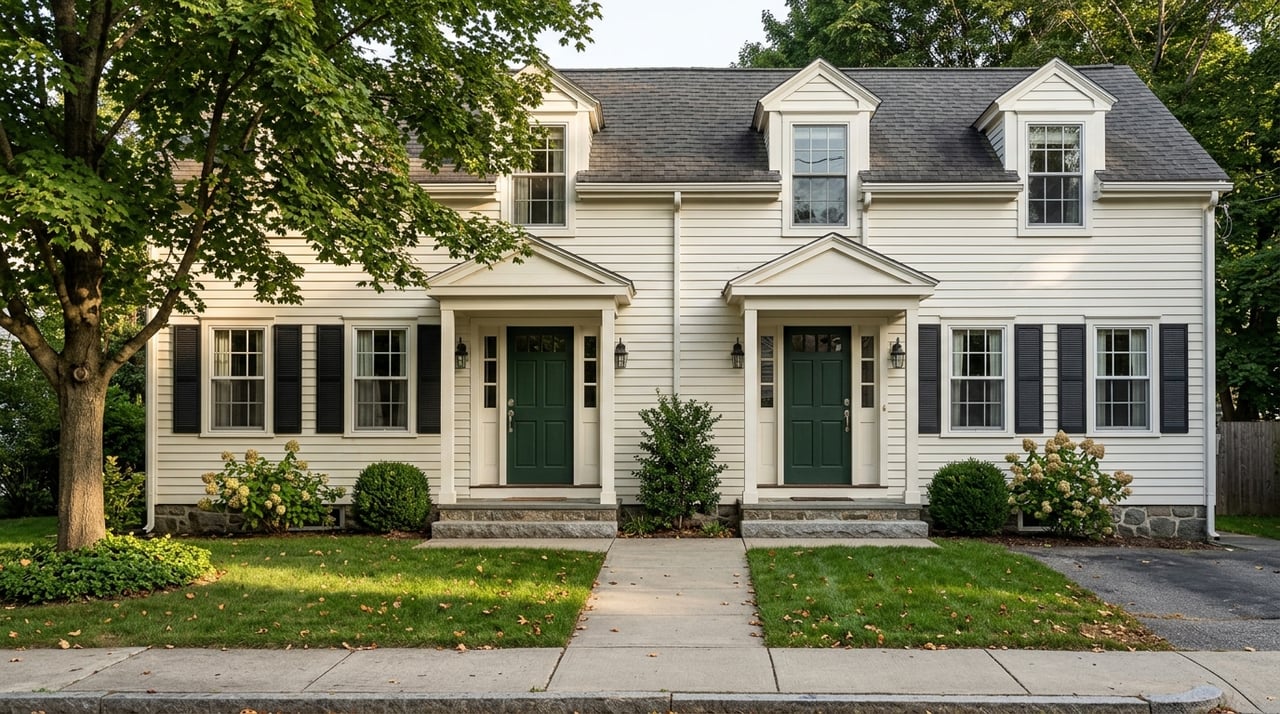
Two-to-four unit properties can offer better income diversification. One vacancy hurts, but it does not necessarily wipe out all revenue. That can make small multifamily properties a practical way to reduce unit-level risk.
They still need disciplined underwriting. Shared systems, higher wear, and more tenant turnover points can affect your budget, so you want enough margin to handle them.
Seasonal or Short-Term Rentals
Seasonal or short-term rentals can work in the Bangor area, but they require the most active management. Vacancy swings, insurance planning, licensing, and compliance are all more demanding than they are with a stable year-round lease.
If you are considering this route, reserves matter even more. Seasonal gaps and operating surprises can create cash flow stress faster than many new investors expect.
Renovation Risk Is a Local Issue
In Greater Bangor, renovation potential can create opportunity, but only if you price the work and timeline honestly. Bangor Code Enforcement says permits are typically required for new buildings, additions, residential work such as garage conversions and basement finishing, and for electrical, plumbing, and HVAC systems. On-site inspections may also be required.
That means a value-add plan is never just about materials and contractor bids. It is also about city process, inspection timing, and whether the scope you have in mind fits local requirements. If you are buying based on future upside, those steps belong in your timeline from day one.
The Fire Prevention Bureau also plays a real role in ownership. The bureau enforces fire and life-safety code and performs about 1,600 inspections each year tied to complaints, permits, referrals, and licensing. For investors, that makes compliance part of the operating plan, not just a one-time closing concern.
Older Homes Need Extra Due Diligence
Many rental opportunities in this region involve older housing. If a property was built before 1978, lead-based paint rules may apply. Maine’s Attorney General says federal and Maine law require certain lead-based paint disclosures, and the Maine Department of Environmental Protection says landlords of pre-1978 rental units should inspect annually for deteriorated paint and make repairs as needed.
That is important for both budgeting and operations. If you are buying an older building with plans to renovate or lease quickly, lead-safe repairs and compliance steps should be treated as part of your acquisition cost.
Flood risk is another local due-diligence item you should not skip. Bangor’s comprehensive plan says FEMA-mapped flood zones are primarily associated with the Penobscot and Kenduskeag rivers. Before closing, it is smart to verify whether the property sits in or near a mapped flood area and how that could affect insurance, financing, or future work.
If a property uses private septic and you are planning short-term rental use, Bangor says a site evaluator’s report is required and septic upgrades may be needed. That can materially change your project cost, so it is worth checking early.
Heating Costs Can Make or Break Margins
Bangor’s climate deserves serious attention in your numbers. NOAA’s 1991-2020 normals for Bangor International Airport show 7,626 annual heating degree days. In plain terms, this is a market where insulation quality, air sealing, and heating system condition can have a major impact on operating costs.
That is especially true in older housing stock. A property with dated systems or weak insulation may look affordable upfront but cost much more to operate. For small portfolio owners, that can affect tenant retention, maintenance calls, and monthly cash flow.
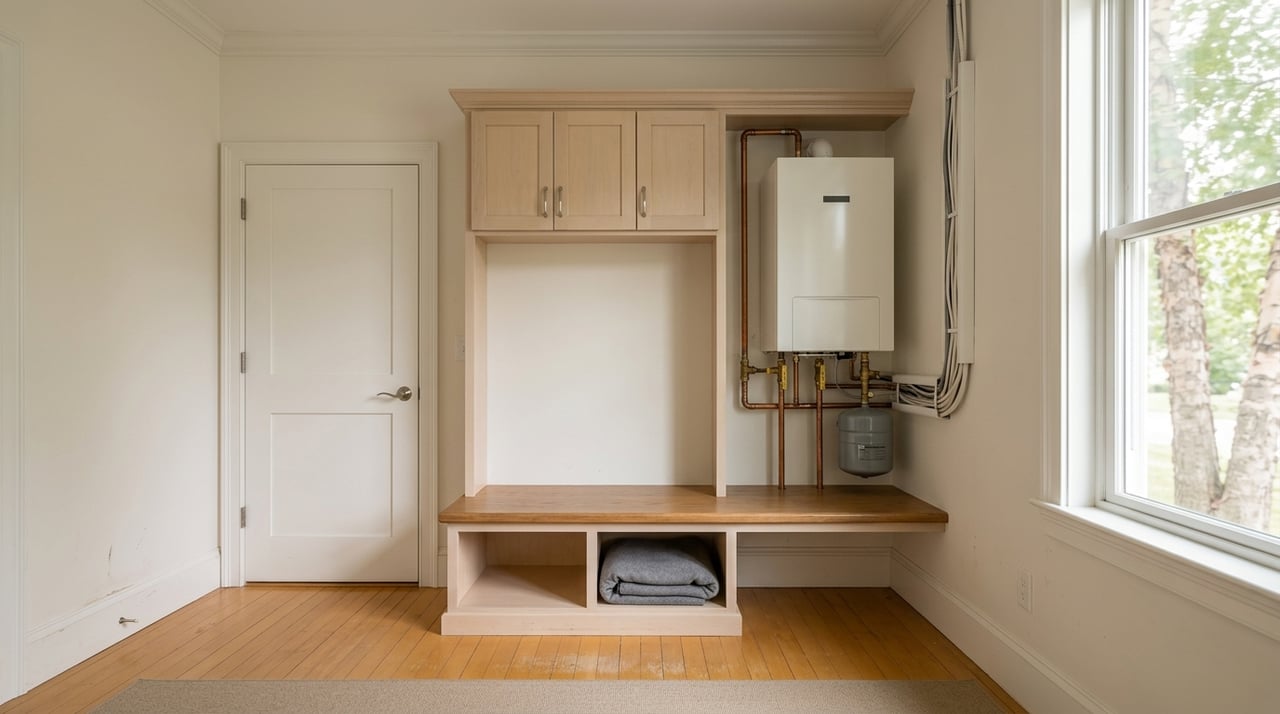
When you walk a property, pay close attention to the age and condition of the boiler or furnace, visible insulation upgrades, window quality, and signs of deferred maintenance. In a cold-weather market, these details are not minor.
Know Bangor’s Rental Rules
Operating a rental in Maine means following state notice rules carefully. Maine law requires at least 45 days’ written notice for a rent increase, and 75 days’ notice if cumulative increases within a 12-month period reach 10% or more. The Maine Attorney General also states that a security deposit cannot exceed two months’ rent.
For a small portfolio, good recordkeeping matters. Your leases, notices, deposits, and communication process should be organized from the start.
Bangor also has a long-term rental registry pilot running from July 1, 2024, through June 30, 2026. The city created it to better understand rental ownership and property characteristics. In practice, this means owners should be ready with accurate records, current contact information, and prompt responses when city inspections or follow-up requests come up.
Short-Term Rentals Have Tighter Limits
If your plan leans toward short-term rentals, Bangor’s rules are more restrictive than many buyers expect. The city says an owner or operator may apply for no more than five short-term rental units total and may not use more than 50% of the units in a multifamily building for that use. Non-hosted short-term rentals are also capped at 1% of the city’s dwelling units and are issued on a first-come, first-served basis.
Bangor also requires a license, proof of insurance, and a 24/7 contact who can respond within 60 minutes. Inspections are required every three years. The city distinguishes rentals of less than 30 days from longer rentals, so the exact use matters.
For many investors, this is the point where a long-term rental strategy starts to look simpler and more predictable. Short-term rentals can still fit some properties, but they require a more active operating model and more upfront confirmation before you close.
A Smarter Portfolio Strategy
In Greater Bangor, the strongest small-portfolio approach is usually not chasing the cheapest property. It is buying with enough margin for taxes, heating, repairs, compliance, and vacancy while matching the property type to the submarket. That often leads to steadier results than a deal that only works if nothing goes wrong.
This is where local knowledge and construction-aware analysis matter. If you are comparing a single-family home in Bangor, a small multifamily near a demand anchor, or a renovation-heavy property with future upside, the right answer depends on the numbers, the condition, and the specific local rules that apply.
If you want help evaluating rentals, renovation-sensitive properties, land, or small portfolio opportunities in Greater Bangor, James A. Spear brings a process-driven approach backed by local market experience, technical insight, and responsive guidance.
FAQs
What makes the Greater Bangor rental market different from Penobscot County overall?
- Bangor has a lower owner-occupied housing rate than Penobscot County, which makes it more rental-heavy, and rents vary meaningfully across nearby communities like Brewer, Orono, Hampden, and Hermon.
What should you include when underwriting a rental property in Bangor?
- You should account for vacancy, collection loss, maintenance, repairs, reserves, property taxes, heating costs, insurance, and turnover rather than relying on gross rent alone.
How much are property taxes in Bangor for rental owners?
- Bangor’s FY2026 mill rate is $17.70 per $1,000 of net valuation, so a property assessed at $300,000 would have about $5,310 per year in property taxes before exemptions.
What renovation permits may matter for Bangor investment properties?
- Bangor typically requires permits for new buildings, additions, garage conversions, basement finishing, and electrical, plumbing, and HVAC work, and some projects may also require on-site inspections.
What lead-paint rules should Bangor landlords know about?
- For pre-1978 rental properties, certain lead-based paint disclosures are required under federal and Maine law, and Maine says landlords should inspect annually for deteriorated paint and make repairs as needed.
What notice is required for rent increases in Maine rentals?
- Maine requires at least 45 days’ written notice for a rent increase, and 75 days’ notice if cumulative increases within a 12-month period reach 10% or more.
What should investors know about Bangor short-term rental rules?
- Bangor requires licensing, insurance, a 24/7 contact, periodic inspections, and it limits both the total number of short-term rental units per owner or operator and the share of units allowed in a multifamily building.
Why do heating costs matter so much for Bangor rental properties?
- Bangor has a cold climate with 7,626 annual heating degree days, so insulation, heating system condition, and utility budgeting can have a major effect on cash flow and operating performance.